

Marxism has a tremendous amount of work placed into the development of analytical processes. These analytical processes inform the development of practice, structure etc. However, while materials explicating upon analytical framework is widely available these days, materials summating actual structures and practices built using those theories are actually quite rare, and even more rarely studied. As a result, there has been wide variation in the actual form of the communist organizations around the country; from ‘intermediate orgs,’ ‘revolutionary mass orgs,’ and every imaginable coalition, ‘big tent,’ or unity project fathomable. While variety is by no means negative, there are common structures and tools that tend to undergird successful communist projects.
This document aims to forward a working theory of practice and organization. However, all theories must stand the test of practice, and be revised wherever needed. This document is informed by a mixture of actual summation and study of historic and contemporary documents. This document covers the basic bodies that we seek to build; Mass Organizations rooted within the working class, and a Communist Organization that exercises leadership within them democratically through Cadre, organized into Units. While communist organizations of the past have varied in their precise structure, decision making processes, and names used, these basic building blocks tend to be a commonality.
THE COMMUNIST PARTY:
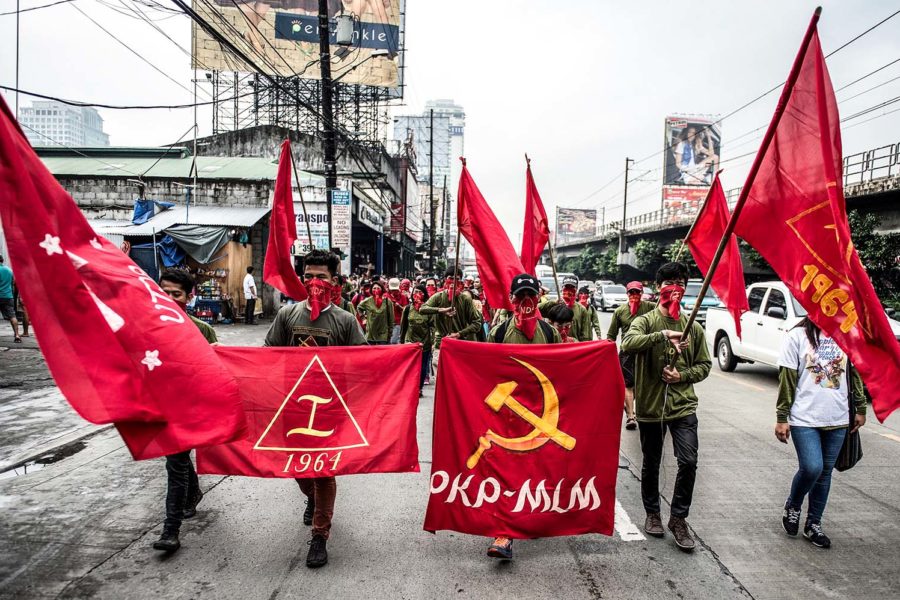
A communist party, when it is established, is a politically conscious and intentional organization embedded in the working class. A communist party has influence over the working class not because of its ideas alone, but because it is rooted in mass organizations such as unions, tenant associations, and community organizations. The party we are working towards is explicitly militant, revolutionary, and literally (by way of actual organizational structures rather than spiritual affinity) representative of a broad, militant section of the working class. The party must possess revolutionary intentions and capability. While there are various organizations claiming to be a communist party, this kind of organization simply does not exist in this country.
Intention comes before capability. Both the party and the communist (pre-party) organization share the explicit intention, or a collective recognition of the necessity of revolution, and the collective will to pursue this necessity. The ability to carry out a revolution without the collective recognition of the necessity to do so is pointless (in terms of force, the US military could have a coup tomorrow, but there is no collective will within the US military to do so). Similarly, the collective recognition of the necessity and the will to pursue revolution means very little without the ability to do so. This last point should be obvious to anyone familiar with the smattering of irrelevant ‘revolutionary parties’ in the U.S. that can do little more than denounce or endorse the actions of other social forces more organized than them.
The Communist Party, when it exists, is the embodiment of the combined recognition of the necessity of revolution, the capability and will to pursue this end, and the revolutionary theory and strategy necessary to achieve it. To bring this point down to earth; all these aspects of a communist party are associated respectively with a genuine connection to a broad, advanced, active, and militant section of the working class, as well as the demonstrably correct line and outlook (meaning functional philosophy, theories, and plans, proven in struggle) to guide them in struggle against capitalism.)
At present, there are organizations that recognise the necessity for revolution and are attempting to develop projects to reach that goal, however no organization has the ability to carry out a revolution, even in a revolutionary moment. For most of these organizations there is very little actual connection to a militant section of the working class. There is no functional theory derived from the experiences of leading the working class in struggles against the class enemy. Without this experience and the theory derived from it, any sincere planning for ‘the revolution’ will largely be suicidal guessing. We have a gap to bridge between our recognition of the necessity of revolution and our ability to advance towards it. If nothing else, planning for and waging revolution is a monumental task in logistics, leadership, organization, and mobilization.
A communist party must possess the following, at a minimum;
- Internal Discipline and Democratic Centralism. Democratic Centralism is the idea of ‘freedom of discussion internally, unity in action externally, the minority is subordinate to the majority.’ This requires serious internal discipline by members of a revolutionary party, which may require purging minority elements within an organization that refuse to abide by or carry out a majority decision.
While this certainly seems rigid and restrictive, it is important for a communist party to be able to act as a conscious, intentional political actor in times of crisis. Collective decision making becomes meaningless when any member of an organization can simply ignore collective decisions. To some communists this is all a given, but much of the left rejects this kind of ‘rigidity’ out of hand. Even less organizations have shown themselves willing to practice this principle.
- A Political Line formulated from concrete analysis of concrete conditions. This party will have discovered basic concrete truths regarding the needs of the working class (both in the realm of dignity and survival, and in the realm of struggle) through struggle. This party will have successful experience connecting Marxist concepts and applying class analysis and dialectical materialism to the context of the United States.
It is through successful practice that (functionally rather than spiritually) revolutionary politics, methods, and philosophy can be created, written into a program, and replicated on a large scale. Any organization pretending to be ‘the communist party’ that is incapable of out-organizing a landlord, business owner, or municipal government should be heavily scrutinized. Any program that is not informed by struggle, and through direct work among the working class is worth very little.
- Recognition and understanding of the enormous scale and difficulty of revolution in our concrete time and place, that is, in the 21st Century United States . There is no place for infantile naivete about the strength of our enemies or wishful thinking about the consciousness and willingness of the working class to fight. A communist party must understand that we are climbing a mountain, not walking up a hill.
THE PRE-PARTY COMMUNIST ORGANIZATION

Many small tributaries combine to form large rivers.
The pre-party communist organization facilitates the process of connecting the collective recognition and will towards the revolutionary necessity to real world tasks and needs in the present. The pre-party communist organization works to develop closeness to the working class by participating and leading in struggle, creating mass organizations grounded in class struggle where it’s necessary and non-existent (laying the groundwork), and to derive working revolutionary theory from this experience.
A communist organization is a collection of individual communists, working through the mass movements, in mass organizations to struggle for working class interests in the here and now. This organization is explicitly revolutionary, and composed of committed, capable, and focused organizers. These organizers should be capable of prioritizing discipline and work towards democratic centralist practice (freedom of discussion, healthy debate, broad participation, but unity in action). A communist organization is different from a party, and does not pretend to be a party, but rather recognizes itself as part of the task of building one.
The communist pre-party organization creates an immediate, concentrated, and intentional space for communists to study collectively, develop ideological unity through discussion and struggle, and to determine their goals and create plans to achieve them. Such plans might include:
- The accumulation of experience participating in and, when possible, leading struggles among the working class. Critically this experience is accumulated in (ideally written) theory, philosophies, and plans. This will allow for particular successes to be eventually generalized, to avoid repeating mistakes, and to repeat successes. In this document I will argue that the basic tool for advancing this goal is class and sector oriented mass organizations, immediately positioned to participate in daily struggles, and oriented towards the advancement of revolutionary ideas among the masses.
- Through the course of struggle and summation determine functional internal methods of arranging the organization’s activities. In this document I will argue that all approaches at a minimum should include a process of organizing cadre into units as the basic building block for their activities.
- Through this process, grow the ranks of the communist organization through targeted and intentional, invite only, strategic recruitment of mass organizational leaders. In this document I will argue that we should strive to bring ourselves up to the level of ‘cadre,’ and recruit people you believe to be capable of filling that role as well.
- Conduct struggle to reach a higher, more concentrated unity with friendly forces. This includes other left-wing forces, but also other class organizations (like unions, tenant associations, organizations fighting in other sites of oppression). In this document I will discuss common mistakes in advancing this goal, and methods that have worked for us.
A critical task for the communist organization is to gather disparate, often scattered movements and social forces in order to focus them into something powerful. This means the development of summations and theory as well as linking up, struggling, and collaborating with similarly minded formations. This also calls for finding other organizations led by various social forces and winning them over to the necessity of Marxism as well as the organization’s plan, theory, and philosophy. The goal of gathering these scattered formations is the creation of a communist party with revolutionary politics informed by the ideas and needs of the masses, with deep connections to the working class in their struggles, and the capability and intention to carry out a revolution.
The communist organization fulfills the interim need between the near total disorganization of the working class we face today, and the explicitly revolutionary, disciplined, capable, and consciously revolutionary party we need. The pre-party communist formation is where functioning outlooks, slogans, methods, philosophy, etc are discovered and developed through practice. The process of creating a party from this embryonic stage is about asserting correct (meaning functional) ideas through practice, and through that success growing into a party. We need to discard bad and mistaken ideas, and preserve and proliferate correct ideas.
“Do people pick grapes from thornbushes, or figs from thistles? Likewise, every good tree bears good fruit, but a bad tree bears bad fruit. A good tree cannot bear bad fruit, and a bad tree cannot bear good fruit. Every tree that does not bear good fruit is cut down and thrown into the fire.”
We have a wealth of historical experience to draw upon. From the Russian experience we have the works of Lenin and others; from the historical upheavals of the Chinese Revolution and its Cultural Revolution we have the works of Mao and others. There are over 150 years of class struggle to analyze and learn from, including modern examples with both positive and negative aspects in the Philippines, India, Nepal, and Peru. However, even the best understanding of these things is toothless if we fail to adapt and particularize those successes and failures to our own time and place (and thereby attempt to innovate and build upon them). Marxism is a living philosophy, and all things within it should stand up to criticism. Our number one task today is to develop a body of work to apply this theory, and its historical lessons to the context of the United States.
MASS ORGANIZATION:

UPS teamsters holding rank-and-file parking lot meeting to prepare for the (likely) upcoming strike. Discussions focus on workplace issues.
Capitalism is not an idea; capitalism is a world system based upon interlocking systems of exploitation, property relations, legal mitigations and management, and violence. Capitalism is the sum total of these relationships; to paraphrase Mao; the general resides in the particular. Because of this, the struggle for socialism doesn’t revolve around ideas, but rather the organizing of the masses toward the end of confrontation with the capitalist class at the sites of capitalism’s reproduction (or at its particularities).
The state is not a singular body, or control room. There is no hill we can capture with the ‘start socialism’ button on it. The state functions through a centralized network of governance. The bodies and institutions responsible for governance and the class they represent aren’t going to simply disappear due to some formal seizure of power, nor will their armies, police, or reactionaries that uphold them.
The struggle against the capitalist state is not won through a grand culmination and uprising or some ‘final battle.’ Historically, revolution manifests as a process of crisis among the ruling class based around a breakdown or rupture in the basic structures of economic and political life. This crisis creates the inevitability of a break or collapse, and the opportunity for new forces to come forward and consolidate a new order. This is an opportunity (and by no means a guarantee!) for a revolutionary organization to consolidate power.
The likelihood of success for revolutionaries to successfully seize power is determined by their organized strength among the working class. The tool for organizing the working class is mass organizations. Mass organizations are based in a sector of the working class, working in the interest of the working class. These are organizations like Labor Unions, Tenant associations, organizations fighting manifestations of national oppression, and community organizations, all working to advance the interests of the working class in their context. This looks like struggles for concessions from bosses or landlords, reforms from government bodies, etc.
An important role of the communist organization in accumulating forces is to participate in, and often to build from scratch democratic, open, and class-based mass organizations necessary to facilitate broad participation by the masses in struggle. This means the communist organization needs to be capable of analyzing the actual relationships of capitalism and identifying particular areas ripe for struggle and developing practical theories regarding the organization of the working class on a localized level to fight for their interests. To be sharp and direct; no organization or ‘party’ that cannot out-organize a business owner or landlord is going to be able to lead a revolutionary struggle against landlords and business owners as a class.
Mass Organizations are different from political parties/organizations in that membership and participation in them is predicated upon class and activity, not politics and philosophy. Mass organizations can be politically diverse; they can include liberals and relatively apolitical elements as long as they are ready to struggle for the interests of their communities, coworkers, etc. Mass organizations seek to gather the advanced (meaning active leaders, movers and shakers) into an organization, and then mobilize the wider, intermediate sections of the working class through the advanced. It is the role of communists to struggle among the advanced and win them over to their revolutionary program;mass organizations facilitate this task directly.
There has been much debate around the membership of mass organizations and what constitutes ‘the advanced’. Some say they should be composed of ‘revolutionaries and anti-capitalists only’. We say; It is easier to teach marxism to a non-communist who is committed to struggle than it is for a disconnected communist to invent, from nothing, a connection to a community. There is nothing that makes self-proclaimed communists innately better organizers than others, often enough the opposite is true. Furthermore, organizing primarily among leftists misses the point of organizing writ large, which is to transform the consciousness and capabilities of the masses more broadly through struggle.
Instead of basing our organizing efforts in subcultural cliques and ‘leftist’ echo chambers, we should instead orient our work towards sites of reproduction for capitalism, for example;
The workplace is the most basic site of reproduction, and ultimately the most important; capitalism’s logic is ultimately determined by its need to exploit the labor of the working class. The capitalist class, under the threat of starvation, forces the working class to sell its labor power in the workplace. Struggling in this environment means to work to contest the capitalist class’s control over our bodies in this environment, for the fruits of our labor they appropriate, and for control over workplaces. We should divide the types of activities in these realms into two priorities:
- If there is a union with actual reach and power in a sector of the working class, a priority should be to struggle within that union to combat collaborationism, economism, corruption, etc, and to win the wider organization to class struggle. A quick appraisal of the history of the labor movement will tell us that this form of struggle is extremely important, often more important than organizing the unorganized.
- If there is no organization in a sector, organizing the unorganized is then primary. There is a lot of credible work regarding the reasons why when doing this we should organize at first based on basic class economic interests (raises, hours, hiring/firing, work positions, etc.) There has been a lot of derision towards this method due to its tendency towards economism. However, economism is an inevitable error of an organized and capable working class IE ‘trade union consciousness.’ It is our job as communists to organize and enhance the capabilities of the working class, and eventually struggle against economism if we succeed at the first task. This is also why entering existing unions with power and reach is preferable; we can struggle to reach the already organized and capable working class rather than working to create that organization and capability from nothing.
The workplace is also where ‘social norms’ like sexism, racism, and homophobia are often reproduced, or at least normalized. By replacing these negative ‘social norms’ with solidarity in collective struggle, we can confront and break down these chauvinisms at their site of reproduction.
Land, property, and housing; Land under capitalism, whenever possible is used to collect rent, or generate profit. The needs of capitalism are often antagonistic to the needs and desires of the people. Struggling in this realm can vary a lot, but they ultimately contest the capitalist class’s control over land and property, examples include;
- Tenant Unions, that collectively struggle against landlords to force repairs, rent reductions, halt evictions, etc.
- Organizations of the homeless that collectively struggle to fight camp sweeps, for housing, and (historically) for the right to use distressed properties (squatting.)
- Struggles revolving around the exploitation of natural resources (mining, lumber, oil, etc.) The forms this struggle has taken has varied from various forms of (highly illegal, which means we legally have to discourage them) clandestine organization and activities, to public marches against (for example) the selling off of national monuments.
These struggles take on additionally important meaning when they pertain to land use in oppressed communities, such as mining projects on indigenous land, or a white slumlord extracting rent from a predominantly black or latino community.
Media work can be very important when paired with the above efforts. Historically the left in the USA has managed to use various forms of media to grow and recruit. The battle for public sentiment is very important because it helps to create fertile ground for our organizations to grow. However, media work alone is not inherently useful, we should divide media work into two categories;
- The positive example that readies the working and poor classes for struggle, and is ideally tied to the work of an existing organization to immediately channel the sentiments of the masses into action. This is often useful in finding the initial (first 6-10 members) of a mass organization.
- The negative example of various forms of opportunists, careerists, and grifters who publicly engage with basic ‘leftist’ ideas positively in an effort to enhance their non-profit/Media career, get twitch stream donations, sell books, accumulate ‘clout,’ etc.
In our contemporary context (one of extreme disorganization) the line between these two kinds of media work is not always clear. We should encourage the former, and discourage the latter, but approach this question with flexibility and finesse.
Mass organizations create a chain of connections between the communist party/organization, the active elements of the working class with diverse politics, and society in general. They provide a space for explicitly revolutionary communists to have direct, at-length conversations with influential parts of the working class. Critically, they change the context of these discussions from intellectual debate over sentiment to conversations based on practical shared class interest and the struggles to advance them. Further, these interactions allow the communist organization to formalize, centralize, and turn particular successes into general strategies to be implemented and adapted widely. Without this chain of connection, communists are guessing at correct policies, lines, etc, rather than discovering them.
Mass organizations are, as a historical fact, the bodies that have allowed for all communist revolutions to overthrow bourgeois and feudal states. From The Russian Social Democrats’ (who became the communist party) “On Agitation”, to Mao’s articulation of the Mass Line, this fact has been long recognized by communist parties of the past. The insistence on the mass movement having independent organizations, separate from the party, that the party can work within was a central feature of the debates between Lenin and the mensheviks within the RSDLP. To deny these points is not a matter of differing opinion by leftists, it is historical revisionism. (See The Tasks of the Russian Social-Democrat; One Step Forward, Two Steps Back; A Retrograde Trend in Russian Social-Democracy; Lenin)
Within the United States, there exists amongst the left an incorrect position on mass organizations that understands them broadly as a form of reformism; this is incorrect. Reformism views the struggle for specific reforms, or a series of reforms, as the end goal of organizing rather than a means to an end. This tends to build careers for individual activists, rather than good organizations. When reforms are achieved or defeated, organizations based around them tend to seriously (and sometimes fatally) flounder. This is because unity is predicated upon singular, usually negative (“STOP X” “No to Y!”) demands (rather than class interest and class politics), and structure is usually informally built around the person/people who came up with the demands in the first place. Specific demands being made irrelevant can lead to organizations quickly losing their basis of cohesion, but can sometimes allow the initial leaders to have a good line on their resume when they apply for an NGO position in their future.
The mass organizational outlook, on the other hand, places great importance on the creation of structure, class-based political outlook, theories of practice, etc, and an independent militant political will within the mass organizations that cadre are working in. While reformism makes an end in itself out of achieving a specific reform or set of reforms, mass organizations have the goal of organizing our class into capable militant organizations that can vie for power. Both reformism and mass struggle include struggling against a landlord, city council, supervisor, etc for a specific concession or reform. Reformism places primacy in achieving the reform, and mass organizations place primacy in developing organizational capability based in militant formations, organized with the goal of developing revolutionary capacity (IE, the ability to overturn the class the mass organizations are developed to combat.) This is also informative upon the methods used by mass organizations; we want to develop militant organizations capable of contending for power and control over political and economic life more generally.
Campaign-Commandism is an error that tends to launch campaigns thought up by communist cadres without input or feedback from the masses, and go out and propagate these campaigns among the masses. This is an error because of an under-emphasis on investigation, mass participation, and mass organization’s independence from communist cadres. The choice of campaign tends to be informed by ideology, philosophy, or political line rather than the felt needs of the people, readiness of people to struggle, or material developments. Sometimes this results in strong campaigns, and develops good organizations, but this is incidental and reflective of good leaders and luck rather than good organizational theory.
This error still maintains the goal of organizing the masses into long-term class oriented organizations with the end goal of revolution, but falls into pitfalls similar to reformism. This is because primacy is placed in the thinking and analyses of ‘communist leaders’ rather than the felt needs and readiness of the masses. This error causes a failure to cultivate mass organizations’ structural, cultural, and intellectual independence. This is because the reasoning, logic, and context for campaigns lies within the often secret, always less accessible barriers of the communist organization rather than the mass organization. This results in stagnant campaigns and organizations wholly reliant on communist cadres to function with poor retention due to poor understanding from participants.
Relative to the wider communist movement, the people who perpetuate this error are more correct in their thinking. But in practice they need to become more serious about investigation, the education of the masses, and critically the democratization and independence of the mass organizations they initiate and lead. Democracy is not a default state of organizations, it needs to be facilitated by giving people the tools, knowledge, and experience to make their own independent assessments and (likely enough) disagree with you.
We need to reject the errors outlined above. We aim to do this through an emphasis on investigation, and mass participation, and the building of strong, independent mass organizations. We need to be explicitly oriented towards the education, training, and organization of the masses.
We can draw on the experiences of the past and study these rich examples, stories, and summations of these revolutionary processes. Critically, we also have rich, deep, and advanced examples of this work in the Philippines, India, and Nepal. The mass organization model has working examples all over the world in the modern day, as well as historically, so we don’t need to reinvent the wheel.
THE UNIT:
Units are the mechanism the party uses to bring their politics into direct contact with the masses.
The Communist Organization is able to offer leadership, direction, and make its decisions meaningful through Cadres, organized into Units, that are embedded in mass organizations. Historically speaking, units are the basic building block of a communist party. While there have been a wide variety of arrangements and structures communist parties have implemented, units are a common feature.
Units are (to simplify) substructures within the Communist Organization. A unit is focused on a specific sector of work (ex. ‘Housing unit,’ ‘Unsheltered Organizing unit,’ ‘Union/labor organizing unit.’) Units are often concentrated within mass organizations that exist within a certain sector of struggle, and they work through those mass organizations. The unit, when possible, has separate meetings dedicated to carrying forward their tasks.
Their first task is the gathering of information to inform decision making and the formation of policies and plans for the Communist Organization. Information gathered from on-the-ground organizers in the course of struggle is necessary to consistently make plans and policies relevant and meaningful. Plans and policies written without on-the-ground perspective will likely suffer from subjective errors caused by leaders not understanding the reality on the ground. Units are the ears, eyes, and touch of a communist organization, without them communist organizations are basically just guessing.
Once those plans and policies are created, it is the role of the unit to coordinate cadre in advancing these plans. A significant amount of discussion within units should be dedicated to struggling for genuine support, and unity around the Communist Organization’s plans, policies, etc within mass organizations. This looks like discussing ways to strengthen the mass organization, isolate backward elements, struggling against erroneous ideas, and winning people to the Communist Organization’s politics.
The primary tools in achieving these goals are summation, discussion, accountability, criticism, self-criticism, and sometimes rectification campaigns. The intention should be to build people up towards new understandings, and to build new confidence for people predicated upon marxist theory and red political line, rather than to ‘attack’ or ‘tear down’ their ‘old’ existing ideas. This is of course excluding explicitly backward and reactionary ideas like racism, homophobia, misogyny, etc, although this outlook is still useful in helping people outgrow these negative tendencies. As a general trend, members of mass organizations should become more capable, knowledgeable, and invested with time, and facilitating this process should be a top priority for units. Units should regularly discuss ways to build up the participation, knowledge, and confidence of mass organization participants.
If a unit achieves leadership through bureaucratic means like simply seizing formal structural leadership, or worse, through informal means like hoarding access, knowledge, and tasks, or social peer pressure, then the unit’s leadership will be meaningless. These forms of empty leadership lead to poor buy in, participation, and alienate potential allies. Broad meaningful leadership emerges after prolonged struggle and discussion, and part of that often includes first building up the trust and confidence of people so they feel comfortable to let their opinions be heard. Units should dedicate time to discuss ways to encourage this.
Units allow the Communist Organization to produce direction and leadership in the mass movement. After a decision is reached for action by the Communist Organization to advance a certain plan, campaign, or action, units coordinate cadres to begin agitating and making the case for said plans, campaigns, or action within their respective mass organizations. This broad, coordinated, and democratically rooted method of mass leadership relies on the good judgment, persuasive ability, and patience of the cadre within the units. Real discernment and care should go into who is and is not recruited as cadre.
To summarize the important points of unit function, they;
- Act as the organization’s eyes and ears within the struggle.
- Coordinate cadre in their activities among the masses within a specific sector.
- Democratically struggle to advance the organization’s politics of their sector through education, summation, and discussion within mass organizations.
CADRE:
“We should say that a cadre person is an individual who has achieved sufficient political development to be able to interpret the extensive directives emanating from the [party/organization,] make them his, and convey them as orientation to the masses, a person who at the same time also perceives the signs manifested by the masses of their own desires and their innermost motivations.
They are an individual of ideological and administrative discipline, who knows and practices democratic centralism and who knows how to evaluate the existing contradictions in this method and to utilize fully its many facets; who knows how to practice the principle of collective discussion and to make decisions on his own and take responsibility in production; . . . Also, they are an individual capable of self-analysis, which enables them to make the necessary decisions and to exercise creative initiative in such a manner that it won’t conflict with discipline.” – Che Guevara, from a speech entitled ‘The Cadres: Backbone of the Revolution.’
A communist organization should aim to recruit from a collection of capable working class leaders. This means both the identification of, and the building up of these leaders. The leadership the communist organization has is cultivated and earned, not demanded and taken. When done correctly, this cultivation will produce numerous capable, committed mass organizers with a good grasp of at least basic marxist theory. The communist organization should eventually seek to recruit these working class communist leaders who emerge, or establish connections with us as a result of our work.
A communist organization relies on regular meetings, decisions being carried out, and criticisms being given and received. Further, a key role of cadre is to facilitate healthy organizational culture within mass organizations; meaning real care should go into teasing out and struggling against gender or racial chauvinism, self-aggrandizement, defensiveness, favoritism, etc. This is why in addition to ideological and obvious practical qualifications, cadre should be disciplined, humble, confident, and committed.
CONCLUSION:
This structure seeks to allow for the movement of knowledge, from the lower bodies to the higher in order to inform the creation of plans and policies. It seeks to allow for plans made by higher bodies to be carried out, and particularized in the lower bodies.
Through this structure, communists should have a clearer understanding of what sorts of things they need to be doing. Communists should be working;
- To develop and cultivate powerful mass organizations rooted among the working class. To build up the knowledge of participants, and work to recruit working class leaders to your ranks. To use the red organization to encourage positive developments in leadership, confidence, and participation within mass organizations.
- To root communist organizational structures such as units in mass organizations as a means of facilitating democratic political struggle to bring more working class organizers to marxism. To base decision making, policy, and line formation on actual summation of actions and plans, and actual contact with the masses, rather than pure theorization and internal (even if collective) reflection.
- To cultivate humbleness, and maturity, rather than posturing and bombast. To encourage healthy, inviting, democratic, safe, and transparent organizations for working class people to get involved with. To recruit cadre capable of carrying out these tasks in a disciplined and mature manner. Further, to do the hard work of struggling with and recruiting capable working class organizers, rather than taking the easier route of simply gathering communists of varying capability into an organization.
Leave a Reply