Government officials, media pundits, and the billionaires that control them often talk about ‘US interests’ or ‘the national interest’ when discussing conflicts overseas. When they do this, the implication is that working and poor people in the US have some common political interest with the wealthy classes of this country based on their identity as “Americans”. Nothing could be further from the truth.
Our government is controlled by wealthy capitalists by way of favors, lobbyists, campaign funding, and outright corruption. These domestic capitalists have built our government to protect their interests, and therefore harm the interests of the poor, oppressed, and working people. Domestically, our government officials, funded and controlled by capitalist bosses, are the maintainers of our indignity and exploitation. To state that we have any common cause with these people is an insult.
The capitalist ruling class of the US uses the government to invade countries and gain access to their resources and labor. The US empire uses intrigue and military power to forcibly remove worker protections, trade protections, and any form of collective resource ownership in other countries. Once these markets are opened, they are used to ship ‘good paying US jobs’ to countries where H&M, Nike, or Goodyear pay 20-cent wages, and provide no workplace safety or protections. The ‘opening’ of these markets often impoverishes whole countries.*
This imperial expansion is often only possible with the sacrifice of the US working class. Trillions of dollars are extracted from people in the US through taxation. This money could fund medicine, education, housing, etc. Instead it is largely poured into furnishing our massive military used to police the world on behalf of the US capitalist ruling class. To add insult to injury, this neglect of the people’s needs creates a lack of opportunity, pressuring the poorest into the military. They break our legs, then offer us crutches on the condition of killing and dying for them. * *
When the US empire expands, occasional temporary gains become possible for workers in the US if they are organized and prepared to fight tooth and nail for them. However, as the contradictions of global imperialist capitalism mature, even these temporary advantages are replaced by new attacks made possible only by the global projection of US power.
US unions are made to choose between dramatically lower wages or having their jobs shipped overseas. This deindustrialization gutted the US labor movement throughout the latter half of the 20th century and plunged whole communities into desperate poverty. The widespread disorganization of the US working class exposed future generations of workers to declining pay and worsening labor conditions. These massive attacks on the working class here at home were solely possible due to the global empire controlled by US capitalists.*
Unfortunately, there are many, even on the left, that cannot see this. They believe some variation of the lie that the domestic working classes have an interest in the maintenance or expansion of the US Empire. Some will cite temporary economic privileges given to the US worker during brief windows in US history. But these temporary gains had to be literally bled for, and the capitalist class eliminated these privileges at their earliest convenience.
Think of all the intrigues, manipulations, coups, bombings, and invasions conducted by the US government in the last 20 years. Where have these made the US worker richer or safer? For all the lives given by the working people of this country to the military, where has it benefited them? We all have a responsibility to recognize that the US empire is our enemy. It seeks to deprive both US workers and whole nations abroad of basic dignity and stability to fill the pockets of a few US capitalists.
We need to abandon the myth of a ‘common national interest’ that incorrectly unites US workers with the US capitalist ruling class. The US empire stands on our necks too. From the streets of the US to Gaza, to the Philippines, to Colombia, to Bangladesh. Billions of people at various scales and intensities are struggling in their own way against this empire. The US empire is able to stay on its feet by leveraging its global connections against localized struggles and overwhelming them. Every dominated nation around the globe and every defeated struggle in the US form another link in the chain.
This means to win, we need to think internationally and work in tandem with friendly forces. Gaza, Iraq, Syria, Russia, China, and all other ‘enemies of the US’ are not at odds with the US people. They are at odds with the same people who are standing against our progressive movements here at home. Any reasonable person can and should recognize these forces as at least temporary allies of convenience on the sole basis of sharing a common foe. This does not mean we disregard the litany of valid and important ideological questions regarding this or that government or faction. This means we recognize the need to act strategically to improve our own chances of success here at home.
This piece attempts to give an analysis not of the current crisis in Palestine, but of the existential crisis for the US empire growing from this crisis. This is in order to provide readers the understanding necessary to effectively respond to it. What is happening in Palestine now has opened the possibility of a great defeat for the US empire. Here in the US we should seize upon this opportunity, but, we need to do more than hold protests. We need to act strategically, and to do so we need to understand the actual arrangement of forces on the ground and the stakes presently involved. To act in tandem with friendly forces, we need to understand what they are doing and how our actions can best encourage a good outcome for them and us.
Israel: the empire’s attack dog
“If there were not an Israel, we’d have to invent one.” — current US president Joe Biden
The subject of national identity is complex, and a total analysis of Israel is not the focus of this piece, but basic history is needed. The state of Israel was created in 1948 under the auspices of the British Empire by European Jewish settlers united around the concept of Zionism. Zionism is a movement created in the late 19th century (its first congress was held 1897 in Switzerland) which asserts that Jewish people need a national homeland. This movement was supported by the British (the most powerful empire in the world at the time.) This Zionist ‘homeland’ was nearly founded in a number of locations including Uganda and Argentina, but ultimately these Europeans chose Palestine. We can assume the British supported this decision due in no small part to its proximity to oil-rich nations and important trade routes.
Since then, there has been an influx of millions of mostly European Jews into this Arab country. What has also followed is an ongoing ethnic cleansing of Palestinians from their lands. This has included mass murder, terrorism, poisoning of water, and all manners of atrocities. What we are seeing on our social media feeds today is a continuation of this decades-long genocidal process.
Putting the scale of time and history in perspective is important here. Israeli President Netanyahu’s parents were both European, and he spent much of his early life in the US — and this is not unusual for Israelis. He is leading a government that is committing a genocide against a people that can trace their families back to that land for millenia. Any 76-year-old Palestinian has lived on the land longer than ‘Israel’ has existed. To assert Israel has any right to a land they usurped less than a lifetime ago is an insult to reason and humanity.
As a direct consequence of Israel’s creation, there has been a mass displacement of Palestinians to the surrounding regions. This has provoked hostility and a number of wars between Israel and its Arab neighbors. Israel has a relatively tiny population and geographic size. Because of this it has always relied on the diplomatic, economic, and military support of European and US power against hostile forces in the region.
To receive this (mostly US) aid, Israel has to act on behalf of the US empire when called upon. As outlined in the earlier section, the US empire’s interest is one of plundering other countries for resources and labor on behalf of our domestic capitalist class. Israel’s service to US capitalists inevitably leads to hostility between Israel and its neighbors. For the US empire, Israel is useful as an attack dog that is hostile to its neighbors that can be called upon to maul a potential challenger.
The sustainable existence and growth of Israel as we know it relies on selective inward migration from other areas of the world, retaining newly immigrated citizens, and maintaining a (white, Zionist) Jewish majority. This generally relies on the maintenance of Israel’s brand as a ‘safe haven’ for Jews. If Israel seems like an unsafe place to be, people will not move there, and many people will leave, which will cause a number of existential political and economic crises for Israel. The vital maintenance of this brand as a ‘safe haven’ relies on two factors.
Firstly, preventing the development of a real military power in the region is clearly a basic and primary matter of national security for Israel. Similarly, to the US empire, preventing the development of a viable military threat in the region is considered protection of a key ally. As long as no force can challenge either the US or Israel in the region, then the Israeli and US military can be the sword of Damocles hanging over politics in the region. This is, for example, why the US and Israel have so vigorously opposed weapons trades and nuclear development in Iran. The real possibility that a regional force could bomb the strip malls of Tel Aviv or destroy the Israeli state would make the Zionist project impossible.
Secondly, Israel relies on projecting an image of ‘overwhelming force.’ It is Israeli doctrine to respond to any attack with disproportionate violence to demonstrate that any attack against Israel will result in dire consequences. This will include, if necessary, support from the US empire. This doctrine, perpetuated consistently against far weaker forces as we can see currently in Gaza, is meant to portray an image of Israeli invincibility. This image of ‘Israeli invincibility’ is necessary to project the image of Israel as a ‘safe haven for Jews.’
This alignment of interests between the US and Israel means that weapons, money, intel, etc. given to the Israelis will inevitably be used to protect the US empire’s interests in the region. This is a violent, escalating cycle that can only beget more violence. As long as the US empire has designs on the region, any Israeli state can only be a hostile colonial stranger to its Arab neighbors.
As the level of exploitation and destruction imposed on the middle east by the US empire increases, so will the resistance against the US presence. This conflict will inevitably involve the Israeli state on the side of the empire. Over the last decade we have seen this process accelerate and sharpen.
The Hezbollah Model and the Axis of Resistance
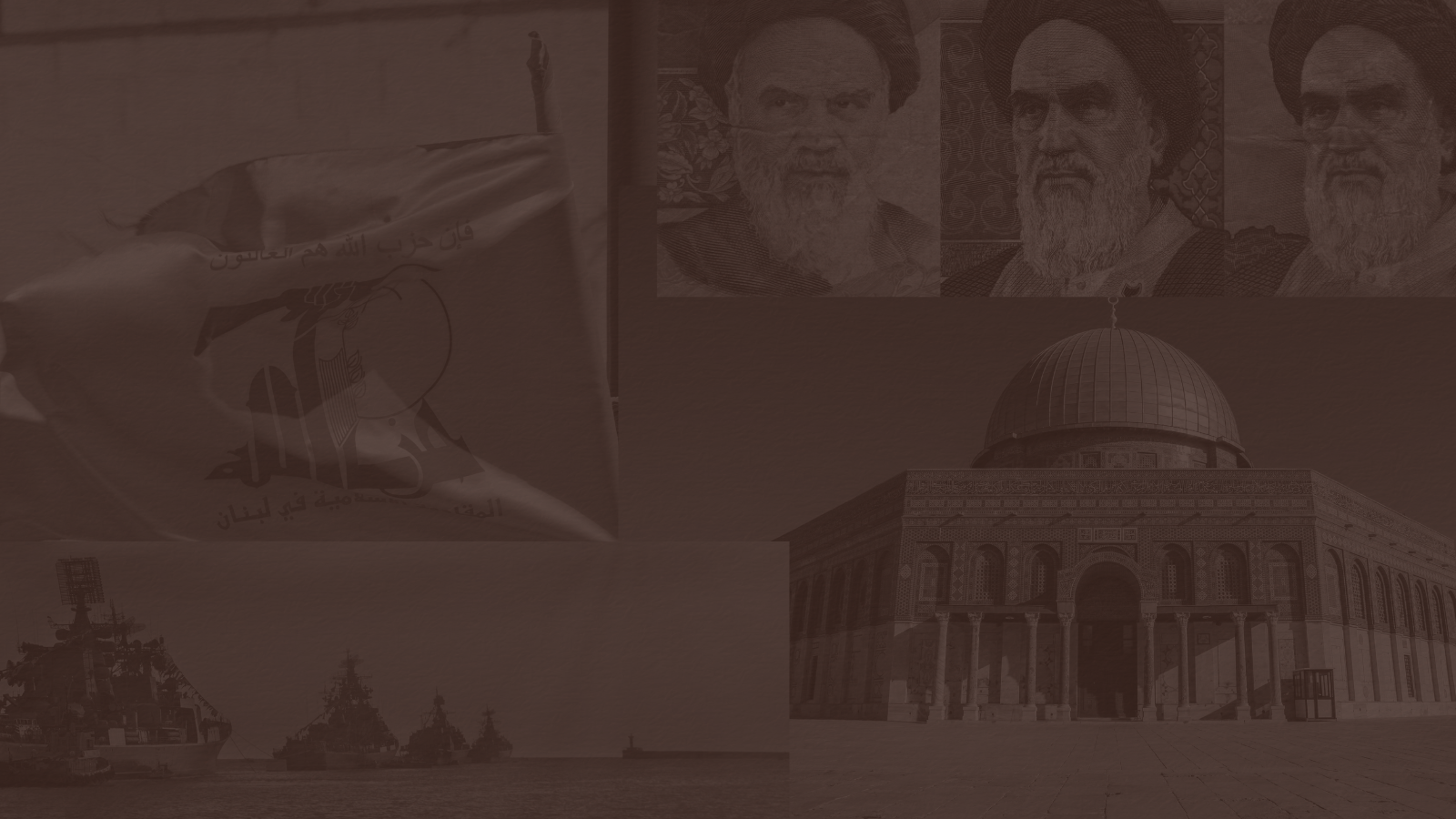
Hezbollah (meaning party of god) is an anti-imperialist political party in south Lebanon unified around their Shiite faith and protecting Lebanese sovereignty. Hezbollah has deep ties to the Shiite community in Lebanon, enjoys loyal support from this community, and exercises great political influence over the whole region. Hezbollah also receives a great deal of funding, training, and political guidance from Iran, and some from Syria as well. These combined factors of discipline, ties to their community, and material support from Iran are why Hezbollah has the most powerful army of any non-state actor in the world.
Hezbollah members are required to be deeply religious. They believe in the Khomeinist interpretation of the ‘Wilayat al-faqih.’ A very important element of the Wilyat al-Faqih is (very generally put) the religious belief that the Ayatollah of Iran has supreme and final religious and political authority. On the ground, this means the long-term priorities and plans of Hezbollah are set by the supreme leader in Iran, but Hezbollah is free to determine how to execute these plans based on their conditions and preferences locally. In this relationship, Hezbollah is able to maintain a genuinely Lebanese character, but still works to advance a common strategy alongside Iran.
An organization in a country as small as Lebanon may seem insignificant. But this organization has fought the Israelis a number of times and won. Where so many Arab governments failed to confront Israel, a few thousand irregular guerrillas succeeded. Most western commentators refer to Hezbollah as terrorists and ‘Iran’s most successful project.’
Hezbollah (and its proto-formations) fought a long guerilla war against the Israeli occupation of Lebanon between 1975 to 2000. In this war they overcame one of the most advanced militaries in the world. This was done by uniting the (historically neglected and poor) Shiite community against Israel. They eventually forced the Israelis to leave Lebanon under fire.
In 2006 Hezbollah kidnapped two Israeli Defense Force (IDF) soldiers to exchange with Israel for their captured comrades. In response, Israel invaded Lebanon and declared it would ‘eradicate Hezbollah’ (sound familiar?). A force of 30,000 IDF soldiers, backed by the most powerful air force in the region, invaded Lebanon. They committed many massacres and crimes, and destroyed large swathes of Beirut and south Lebanon.
Defending Lebanon were around 1,000 Hezbollah fighters, and a smaller number of their Islamist and Communist allies. The outcome of this war shocked the world. Lebanese anti-imperialist forces led by Hezbollah would kill or injure over 1,000 Israeli soldiers and force them back over the border, again under fire, in 34 days. This demonstrated the growth and transformation of Hezbollah from one of a litany of irregular military forces in the region to a uniquely capable and potent force.
The ability for this militant political formation to ultimately write the agenda for a country as diverse as Lebanon (18 sects and over 90 political parties) is just as noteworthy. Hezbollah in Lebanon has united non-Shiite forces including secular nationalists, communists, and Sunni forces against US and Israeli encroachment. Hezbollah even formed, trained, and armed the non-denominational ‘Lebanese Resistance Brigades.’ While Hezbollah’s Shiite and Islamist identity is vital to Hezbollah itself, uniting ethnically, politically, and religiously diverse anti-imperialist resistance forces is key to their strategy as a national liberation movement fighting the Zionist and US presence in the region.
The success of the ‘Hezbollah model’ in Lebanon and the popularity of Hezbollah among Shiites in the region has allowed the Iranian Intelligence Services to facilitate the creation of multiple ‘copy-cat’ organizations all over the Middle East. The gravity and credibility of these groups has put a diverse array of progressive, anti-imperialist forces under the influence of Iran, Hezbollah, and these regional ‘Hezbollahs.’ Iran and Hezbollah have encouraged this development actively by providing arms, funding, training, and other forms of support to forces all over the Middle East, including non Shiite anti-imperialists.
The groups orbiting this new Iran-Syria-Hezbollah-led anti-imperialist alliance are collectively known as the ‘Axis of Resistance.’ This informal military alliance includes Shiite and Sunni muslim organizations, Christian organizations, and organizations fighting to protect national and religious minorities (such as Turkmen and Yazidis). Politically you will find Shiite and Sunni Islamists, but also Secular nationalist, Ba’athist, Pan-Arab, Socialist, Nasserist, and Communist organizations. The binding thread between this extremely diverse alliance is a determination to struggle to expel imperialist forces from the region and fight for their respective national sovereignties.
This diverse, motivated, and broad anti-imperialist Axis has become very strong over the last decade. For example, when Hezbollah defeated Israel in 2006 they had around 1,000 fighters; today they have up to 100,000. The Iraqi and Syrian elements are presently staging bold attacks against US troops all over the region. In Yemen, Ansar Allah (commonly known as the ‘Houthis’; another important Axis member that I won’t touch on for the sake of brevity) has begun firing long-range cruise missiles at Israel and threatening Israeli commerce in the Gulf of Aden. The growth in strength of the Palestinian elements of the Axis of Resistance (due largely to assistance from other Axis forces) is on display as we speak.
The momentum behind the anti-imperialist forces in the Middle East is immense, and it is the backdrop for the conflict in Palestine and Lebanon against Israel we are witnessing today. Understanding the position of the US empire relative to these forces is vital to understanding the conflict and crisis centered on Gaza today.
US imperial presence in the region
The 2003 US invasion and initial occupation of Iraq was at first a breezy success, with US forces invading and taking over the country in less than 2 months. However, the post-invasion occupation was a total failure as the government the US built was reliant on the US to maintain its internal security. The looting of the Iraqi government coffers and the plundering of Iraqi resources by US companies quickly soured the Iraqi attitude towards the US army’s occupation.
Iraqi nationalist, Islamist, and other organizations including Shiite forces such as “Kata’ib Hezbollah” waged a massive resistance against the US occupation. In retaliation, the US army destroyed much of the country and killed hundreds of thousands of people. However, the Iraqi people would ultimately be successful in expelling the US empire. In 2011, the last 500 US troops left the country. It should be noted that the US still maintained massive consulates, and a large private security force even after this point.
Also in 2011, just north of Iraq in Syria, a civil war started as a result of an attempt to overthrow Syrian president Bashar Al Assad. Assad is a historic patron to anti-imperialist and anti-Israeli forces in the region, so has earned ire from both the US empire and Israel. Seeing an opportunity to knock out a regional adversary, the US empire along with her regional allies began to fund the rebels in Syria (see Operation Timber Sycamore).
“[Turkey, Saudi Arabia, and the United Arab Emirates] poured hundreds of millions of dollars and tens of thousands of tons of weapons into anyone who would fight against Al-Assad, except that the people who were being supplied were al-Nusra, and al Qaeda, and the extremist elements of jihadis coming from other parts of the world.” – current US president Joe Biden
The result of the aid to rebels from the US and its allies was a new explosion of violence in Syria, and the formation of a litany of sectarian, Takfiri Islamic fundamentalist armies. While these groups were hostile to the US in their posture, they were patronized by US allies in the region. Among the groups to benefit from the tons of armaments and chaos in both Iraq and Syria was ISIL (AKA IS/ISIS/Daesh) who would spread from Iraq into Syria. In 2013-2014 ISIL expanded aggressively to control around a third of Syria and Iraq and declare a global ‘Caliphate’ from the Iraqi city of Fellujah.
ISIL’s spread threatened the existence of Christians, Shia muslims, Jews, and other religious minorities who ISIL considers apostates and thus marked for death. To make matters worse, the regular Iraqi army quickly deserted during many of the initial battles against ISIL. This left Iraq largely defenseless except for regional militias and the paltry remnants of the Iraqi security forces.
To answer this crisis, in 2014 the government of Iraq integrated a coalition of Shiite militias into the Popular Mobilization Forces (PMF.) The PMF today is a government funded alliance of over 80 militias. Many of these militias are also supported by Iran as attempts to replicate the Hezbollah Model. Many of the Shiite militias in the PMF fought against US troops during the occupation of Iraq by the US military.
The PMF would eventually, with international support, defeat ISIL in Iraq. Their role in defeating ISIL has solidified them as a legitimate force fighting for the Iraqi people. While the PMF is diverse, its most important members are devoutly anti-imperialist and anti-Zionist, and have close ties to the Axis of Resistance. This has meant that the successful struggle against ISIL has significantly empowered the Axis of Resistance in Iraq.
Around 2015-2016, the Syrian civil war would tip in Assad’s direction. This was, and continues to be, a major and humiliating setback for the US. Key factors were Iranian organizational assistance and direct military intervention from Hezbollah. As a result of their participation in the Syrian civil war, Hezbollah gained tens of thousands of recruits as well as a lot of experience.
The Syrian civil war also led to the formation and training of the 15,000-strong Syrian Hezbollah organization and the 20,000-strong Quwat Al-Ridha, another Shia militant group in the region. These groups, along with a litany of secular-nationalist, leftist, and Sunni Axis of Resistance-affiliated forces in Syria have been greatly strengthened over the last 10 years.
“We are keeping the oil. We have the oil. The oil is secure. We left troops behind only for the oil.” — former US president Donald Trump.
The final important factor is that in 2015 the US empire would also use the rise of ISIL as a pretext to station troops and (re)occupy much of Syria and Iraq. While ISIL is largely contained today, the US troop presence has persisted. According to Syrian Oil Minister Bassam Toma’a, around 90 percent of Syrian oil is under the control of US forces. Former President of Iraq Barham Salih estimated that since the US empire’s 2003 invasion, Iraq has lost over $150 billion dollars in oil revenue. This imperial looting has badly stalled reconstruction efforts in these countries and forced millions of people into miserable poverty.
To summarize the situation on October 6th, 2023
On one side we have the greatly strengthened Axis of Resistance which has as one of its uniting principles the expulsion of imperialist forces from the region. They are more united than ever and have momentum on their side. They have member organizations and governments from Yemen to Pakistan and everywhere in between. They have the necessary experience, armaments, and credibility to wage a real war for national liberation in the region against the US empire and its interests. The stakes of such a war are not just political, the people of the region need real ownership over their resource wealth, and control over their governments to rebuild their countries after decades of war. In order to achieve this the US must leave the Middle East.
On the other side, you have the US imperial presence in the region. This presence is necessary to maintain the economic world order of the US (capitalist) imperialist system. As an integral part of this system, you have the state of Israel. As mentioned prior, this state relies on the military, diplomatic, and economic support of the US to maintain its existence as we know it. Likewise, the US relies on Israel as a bulwark against forces in the region that would seek to expel the US empire. If the US is forced out of the Middle East, Israel is doomed, so Israel will fight like hell to prevent this. Both Israel and the US are acutely aware of the precarious situation they are in and have begun to respond with extreme violence to the current challenge.
Al Aqsa Flood
“In appearance [US imperialism] is very powerful but in reality it is nothing to be afraid of; it is a paper tiger. Outwardly a tiger, it is made of paper, unable to withstand the wind and the rain. I believe that it is nothing but a paper tiger.” – Mao
“Israel, which possesses nuclear weapons and the strongest air force in the region, is weaker than a spider’s web.” — Hezbollah General Secretary Hassan Nasrallah, May 26th, 2000, the day after Israel was forced to flee Lebanon under fire.
On October 7th, 2023, Palestinian resistance fighters — led by Hamas and Palestinian Islamic Jihad, with participation from the Communist PFLP, and DFLP (all members of the Axis of Resistance) — stormed out of Gaza and invaded Israel. To do this they had to evade Israeli intelligence, disable the Israeli surveillance networks, and defeat multiple IDF units. They killed at least 300 Israeli soldiers (though likely many more,) 57 police officers, and 10 officers of the Israeli intelligence service Shin Bet. The Palestinian resistance launched 3,000 rockets at Israel and overwhelmed their missile defense system. Hamas would not be expelled from Israeli territory for days. A large number of Israeli civilians were also killed during this invasion.
Hamas and their allies pulling off an operation of this scale and inflicting this severe blow against Israel would have been considered impossible a decade ago. The success of this operation shattered the image of ‘Israeli invincibility.’ In order to restore this image, Israel declared its intention to ‘eradicate Hamas’ and began a general bombardment of Gaza. As of writing this, the death toll for Gazan civilians exceeds 11,000, with about 30,000 injured. Half of these casualties are children. Over 40% of the homes in North Gaza have been damaged or destroyed. Schools, hospitals, ambulances, universities, and journalists have all been intentionally targeted by the Israeli military. Water, food, fuel, internet and other basic humanitarian items have been refused entry into Gaza.
In the West Bank, armed groups of Palestinian resistance fighters began ambushing Israeli troops. Hezbollah, in solidarity with their Palestinian allies, began ambushing Israeli soldiers along the border between Lebanon and Israel. To help defend Israel, the US began to move warships into place to threaten Iran and Hezbollah. Parties affiliated with the Axis of Resistance in Iraq and Syria began bombarding US military bases within their countries. AnsarAllah in Yemen began launching ballistic missiles at Israel’s city of Eliad. The US is continuing to move more troops and war machines to the region as this piece is typed.
Israel has failed to reasonably harm the military capacity of the Resistance through its collective punishment of civilians. The people of Gaza have loudly declared that they will not be forced from their homes. As this is typed, the resistance forces have not stopped launching rockets, and the Israeli ground offensive into Gaza has resulted in mass casualties on the Israeli side. Even Western military analysts have declared that Israel’s stated goal of ‘a total eradication of Hamas’ is unrealistic. The Israeli population has already begun to turn against the war, and riots have occurred in Tel Aviv rejecting the leadership of Netanyahu.
Israel has failed to produce meaningful victories against the Palestinian resistance, or to deter actions from their allies in the region. This has pushed Israel and the US into escalating actions, primarily within Gaza, but also in Syria and Iraq. However, every attempt to wound the resistance has thus far been answered with new attacks from the resistance. This cycle has pushed both parties to gradually escalate, and has all but guaranteed that the only path to victory in Gaza for the Israelis is a total ethnic cleansing of at least portions of Gaza.
The barbarous attacks against Palestinian civilians to compensate for military failure by the IDF has triggered worldwide protest. Particularly, massive and militant mobilization across the middle east has brought middling, passive, and collaborationist Arab leaders under immense pressure from their people to change course politically. Close ties with Israel and the US have become a political liability overnight. The massacres in Gaza are rightfully being laid at the feet of the US empire. In the last 30 days US plans for the region have likely been set back 30 years, all while the Axis of Resistance is enjoying a surge of credibility, support, and growth.
“Everything under heaven is in chaos — the situation is excellent” -Mao
“The Palestinian cause is back on the table. The entire world is on its feet” — Hamas Official Ghazi Hamad regarding the Al Aqsa flood operation.
The US Empire has a difficult decision to make
The US empire can choose to continue to support this ground offensive into Gaza and work to reestablish Israel’s deterrence and image of security. If it does, the situation will surely escalate. Attacks from the Axis against the US and Israel will continue to grow in frequency and severity. Eventually, to maintain this course, the US will need to commit more money, arms, and likely troops to the region. If they do, they will not be walking into a ‘complicated’ political situation, they will be nakedly entering the region as detested invaders.
An abandonment of Israel would likely be political suicide for the US empire. Already the US is spread thin and is abandoning Ukraine. The Afghans who collaborated with the US have been left behind. The US empire’s image is badly tarnished, and if the US fails to stand with Israel its image will become nearly worthless. If this happens, the US’s ability to exert diplomatic pressure through promises and threats will be buried.
Direct US military involvement would have very little domestic support. Hundreds of thousands of people have marched in the streets against US support for Israel. According to polls by Gallup, only 50% of people in the US support US aid to Israel, a sharp decline from almost 70% in 2015. The US empire deciding to reinvade the region and expand its occupation to neutralize the Axis of Resistance would be incredibly short sighted, even for domestic politics. However, making the decision to fold instead would cut deep into many US capitalist-imperialist pockets. While it would be foolish and extremely dangerous, we should be prepared for the possibility that the US empire will engage in a large and direct confrontation against the Axis of Resistance.
A failure to eliminate Hamas will mean that Israel is forced to negotiate. While hope for a real ‘peaceful solution’ or ‘coexistence’ can be mused about, the reality is much more tragic. For all the talk about different scenarios of peaceful coexistence, ultimately Israel is useful to the US as a hostile stranger and attack dog. An Israel that is fully independent and not at odds with its neighbors is an unreliable attack dog.
If Israel was to somehow find itself as a fully independent and integrated state, it would necessarily need to eliminate the sources of this tension. This would mean Israel’s population would need to live as equals with their neighbors instead of looking at them over apartheid walls or through gun sights. It is extremely unlikely that the Israeli public or its civil institutions would allow such a thing to come to pass. Even if it did, an Israel of this kind, or a singular democratic and diverse state composed of ex-zionists and Palestians would amount to the destruction of ‘Israel, the US ally.’ This is, even in the greatest of fantasies, impossible while the US remains in the region.
The possibility for a middle ground between the Axis of Resistance and the US empire has been eliminated. Over the next few years we are going to either see a US withdrawal from the region and an abandonment of Israel, or we are going to see a recommitment of military force to the region. We will see either a fleeting attempt to cling to power by the US empire or the acceptance of defeat. Because these are the possibilities, we can foresee this coming struggle domestically and begin to prepare.
Priorities for Struggle domestically as they relate to the current crisis
Since October 7th, the United States has sent billions of dollars in military aid to Israel, and new deliveries are announced almost daily. There are bills being brought to congress to allow the US military to attack Iran directly. The attacks on US bases are escalating rapidly all over the region. The attacks by Hezbollah against Israel have greatly increased in severity and frequency. We should expect even more escalation the longer this crisis goes on, and the likelihood of a quick Zionist victory seems low. The Palestinian resistance has thus far badly humiliated the Israeli military and stalled the ground offensive to a near standstill.
Compared to the failed occupation of Iraq, the US has far fewer friends and a far more resilient and sophisticated set of enemies in the region. If the US escalates, it will need to commit a far greater number of resources than they did in the 2003 invasion and occupation of Iraq. For this to be possible, the people of the US will be called upon to sacrifice greatly for our domestic capitalist’s empire in the Middle East. On one hand, to fight and die. On the other, to send off trillions of dollars from our communities to pay for precision bombs, jets, and other military equipment. Nevertheless, it seems like a real possibility that escalation will be the chosen path for the US capitalist ruling class.
If the US capitalists cannot win this conflict, or simply concede, they will lose profits because they will be made to pay a fair price for access to labor and other resources in the region. When they lose profits in one place, they will seek to recover them in another. This will present itself at home in rising prices and continued wage stagnation. In other words, the US capitalists will inevitably attempt to force us to pay for their losses overseas. The right wing will see this as a reason to support more war and violence, but we understand that it is all the more reason for common cause with Palestinians and all people in the Middle East to defeat our common enemy.
In this moment of crisis and sacrifice it is important that we are on our feet and thinking clearly. By foreseeing the possible directions this conflict can proceed, we can better strategize in common with Palestinians and their allies against our common foe. Their priorities must become ours insofar as they relate to the US empire.
Mass mobilization is effective in raising consciousness. But problematically, the present wave of mass mobilizations are largely geared towards the humanitarian angle as opposed to solidarity with a national liberation struggle. Much of this ‘sympathy pain’ is likely to disappear (and mobilizations dissipate) when ‘Palestine the victim’ becomes successful in their struggle for national liberation. Even now in the face of unprecedented protests and demonstrations, the US imperialist state has only accelerated its support for Israel.
To overcome these challenges we need to build this anti-war struggle on the basis of common interest and united struggle, not savior sympathy and outrage. As communists, we need to do the hard work of demonstrating to people that the empire’s loss is our gain, and that we should celebrate anti imperialist struggles abroad. While mass mobilization will be important, without mass organization and education, it will quickly become background noise.
We call on all readers to:
First, welcome the quantitative increase in the number of people protesting in the streets. This is undeniably positive and powerful, but we are already seeing the limits of mass protests. In any real confrontation with the US empire, it will eventually be necessary to escalate demonstrations to include extended campaigns of work stoppages, port blockades, and other direct actions whose stakes are dramatically higher. If these tactics became effective, repression by the state would become inevitable. Maintaining a movement while facing repression requires real commitment from those carrying the movement forward.
The reality is that most people animated by ‘sympathy pain’ are likely to turn tail when the tear gas comes out, arrests are being made, and homes are being raided. On the other hand, the world is full of people fighting and sacrificing for their collective interests. Our task is to demonstrate to people that their interests are bound up with Palestine and all other nations/people oppressed by the US empire.
To this effect, we are calling on our readers to join and build community organizations rooted directly in working class struggles and to conduct education within them and through them. This includes tenant organizations, labor organizations, organizations rooted in oppressed communities, and others with an interest in dismantling the US empire. The education we are encouraging is one that actively demonstrates the common interest between those fighting the US empire and the working class in the US. This education will not happen suddenly, it will require many hundreds of people to commit to multiple years of work. This is specifically the work of building and joining working class institutions and the work of struggling to give the masses organized in these institutions a class-struggle (and therefore anti-imperialist) outlook.
The focus of this education should be on demonstrating the common interests of the oppressed people ‘over there’ and our struggles here at home.
Second, we need to uplift and help build the leadership of the Palestinian and Arab diaspora communities in this struggle. This is not important for identity politics reasons; rather, the temporary attention of the wider public and ‘the left’ is an immense liability to any struggle that requires commitment and focus. The largely working-class Palestinian and Arab diaspora have a personal, political, and class interest in seeing the empire lose this fight. Uplifting and building the leadership of this community should be intuitive.
“People of the world, be courageous, and dare to fight, defy difficulties and advance wave upon wave. Then the whole world will belong to the people. Monsters of all kinds shall be destroyed.” – Mao

Leave a Reply